Beyond the Fairy Chimneys 5 Facts About Cappadocia
- Jan 19
- 3 min read

Cappadociaal palimpsest woven by nature with millions of years of patience, and etched underground by human ingenuity during the most challenging times. As a culture and travel writer, in this article I invite you to go beyond the balloon tours and explore the geological and historical depths that constitute Cappadocia's true identity.

1. Is the Name "Land of Beautiful Horses" a City Legend?
The description "Land of Beautiful Horses," the most popular slogan in tourist brochures, is more the product of a strategic maneuver than historical reality. The region's name appears as "Katpatuka" in ancient Persian sources; The technical equivalent of the concept of "Land of Good Horses" in Persian is "Huv-aspa." However, the reason this romantic name is so widely accepted today lies in a striking anecdote from our recent history.
Photographer Ozan Sağdıç stated that when he learned that the generals during the September 12th coup intended to ban the name Cappadocia because they thought it was Greek, he ensured the preservation of this historical name by claiming that it was of Persian origin and meant "Land of Good Horses."
On the scientific etymological side, experts delve deeper. While it was previously claimed that this name meant "Low Country" in the Luwian language, current research reveals that the adverb "katta," meaning "below" or "below," is actually Hittite, and its Luwian equivalent is "zanta." This situation is the most concrete example of how a tourist brand can be built on a "fabrication" or misunderstanding.
2. Nature's 60 Million Years of Patience: Geological Art
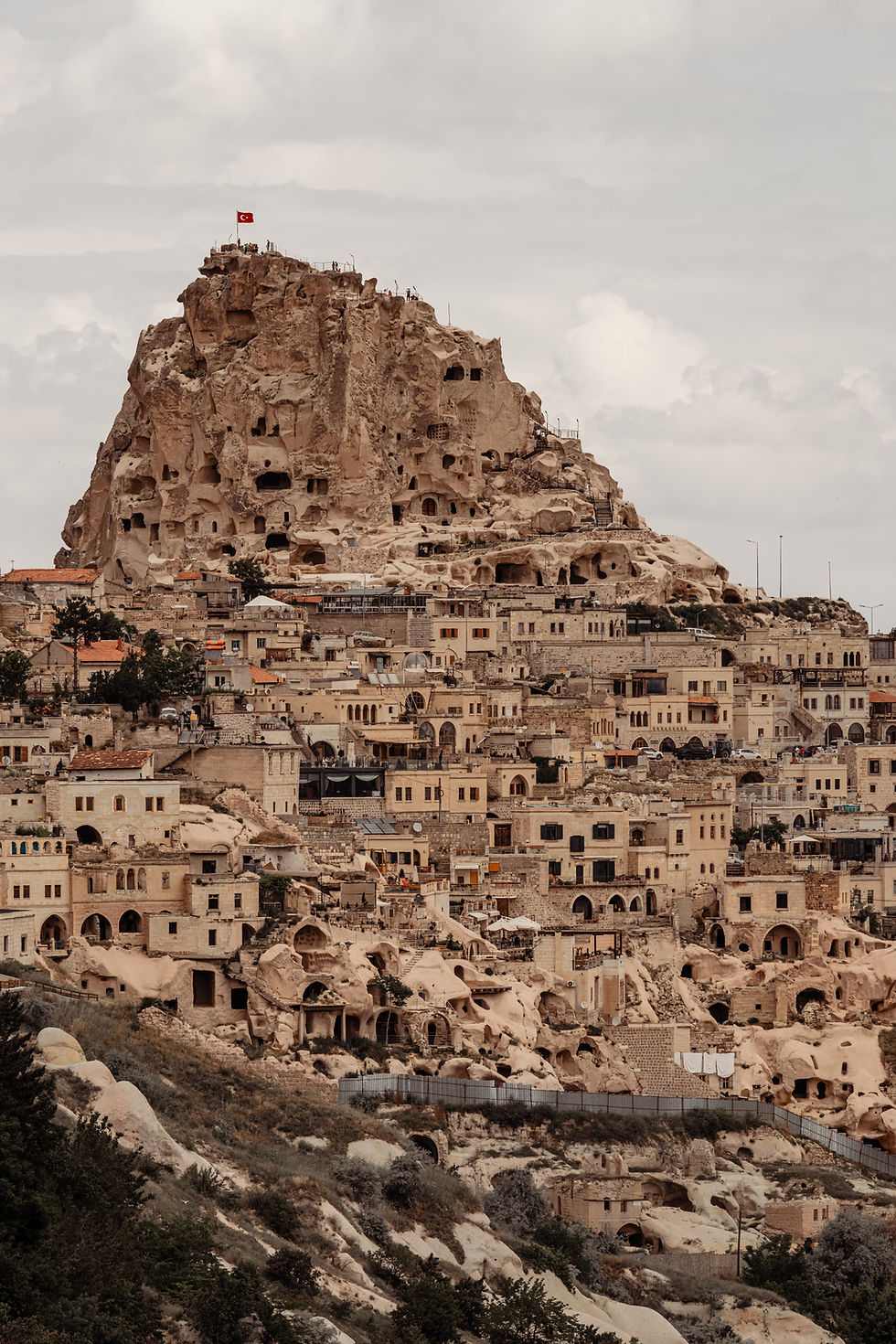
The lithological structure we admire today is a product of pyroclastic materials erupted by Mount Erciyes, Mount Hasan, and Mount Göllüdağ approximately 60 million years ago. The lava and ash spewed from these volcanoes formed a soft tuff layer in the region; this layer was covered in places by hard basalt layers.
Over time, cracks formed in the basalt layer, allowing rainwater and wind to seep through these weak points. While the soft tuff underneath rapidly eroded, the hard basalt blocks on top acted like "hats," providing resistance and protecting the body below. This erosion process transformed Cappadocia into one of the world's most magnificent open-air museums, shaped untouched by human hands. The "art" here lies in the delicate balance between nature's patience and the material's resistance.

3. Hidden Civilization Beneath the Ground: From Shelters to Strategic Centers
Cappadocia's volcanic landscape offered not only aesthetic value but also a vital defense mechanism. From the 3rd century AD onwards, these soft rocks became massive refuges for Christians fleeing persecution from the Roman Empire.
Christians found a safe haven against Roman soldiers by carving shelters into the deep valleys and soft volcanic rocks, and spread Christian teachings there.
The region gained an important theological center identity in the 4th century through the influence of clergymen known as the "Cappadocian Fathers." Underground cities like Derinkuyu and Kaymaklı were used not only to protect against religious persecution but also, particularly, to defend against internal conflicts during the Iconoclasm period (726-843) and subsequent Arab raids. The Arab invasions during this period not only increased the population density in the region but also led to the evolution of the architectural styles of the churches. These underground networks are proof that thousands of people could establish an organized life underground with strategic intelligence.

4. Sustainable Architecture That Hardens Upon Contact with Air
The most important element defining the region's unique architectural identity is the miraculous stonework offered by nature. What makes Cappadocia's houses and famous dovecotes unique is the physical transformation process of the volcanic stone used.
These stones are quite soft when first extracted from the quarry, allowing craftsmen to work with them like dough and adorn them with detailed decorations. However, when this material comes into contact with air, it oxidizes and hardens, transforming into an extremely durable building material. This feature brings sustainability to the architecture; because these stones provide natural thermal insulation, keeping spaces warm in winter and cool in summer. The combination of traditional stonework with this natural resource makes the region an ecological and cultural heritage site.

5. A Modern Registration: Where is the Official Center of Cappadocia?
For years, the question of which town centered Cappadocia was debated, as part of the tourism competition between Ürgüp, Göreme, and Avanos. However, this debate ended in 2020 with an official registration. The Turkish Patent and Trademark Office officially confirmed that Ortahisar town is the center of Cappadocia.


